Make Greenland Great Again!

What is it about Greenland? Every few weeks for the last year, Greenland has come up in speeches by President Trump and he does seem determined for the U.S. to acquire it. Like most of my readers, I knew nothing about Greenland, but it must be important because European Union leaders are getting anxious about President Trump’s intentions, and French President Macron has sent 15 soldiers to guard the island, presumably against a U.S. invasion. That will definitely make Trump think again!
Greenland Has Long Been in U.S. Sights
I wondered if this was just a flight of fancy by President Trump, but in doing some research, I found that the idea of acquiring Greenland was first floated by the Secretary of State, William Seward,who served under both Presidents Abraham Lincoln and Andrew Johnson from 1861 to 1869. He had also been governor of New York State and a U.S. Senator. Secretary Seward proposed that the U.S. acquire Alaska, Iceland and Greenland to gain control over the Pacific and Atlantic Oceans. The U.S. purchased Alaska from Russia in 1867, but Iceland and Greenland have remained under Danish control. What a different world it would be if Russia still owned Alaska.
Maps of the world showing Greenland are difficult to interpret, due to the shape of the globe, but the map below demonstrates its location and significance as the world’s biggest island. Greenland is about five times the size of California but has a population of only 56,000.
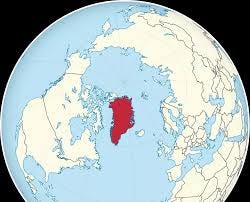
Figure 1. Map of Greenland from The Belfer Center at Harvard. Source.
Marco Ghisetti wrote an interesting article for the Arctic Institute in October 2025, and I have quoted below some sections from his post:
“American interest in Greenland resurfaced after World War I, particularly regarding fishery rights in the North Atlantic. However, it was the outbreak of World War II that brought Greenland’s geopolitical significance into sharp focus, transforming it into a critical military and strategic asset. This shift was driven by three key factors:
The German Occupation of Denmark (1940): The US feared that Germany’s occupation of Denmark could lead to Berlin claiming Greenland and Iceland, threatening the security of the Western Hemisphere. Greenland was seen as falling within the scope of the Monroe Doctrine, which asserted U.S. dominance in the Americas.
The Shrinking of Distances: Technological advancements in aviation and naval capabilities during the 20th century had “shrunk the world”, pushing American interventionists and expansionists to argue that traditional US isolationist policy had become untenable.
The Opening of the Arctic: The advent of air power opened Arctic spaces for the first time, forecasting what some termed an “Arctic Mediterranean.” The azimuthal projection centered on the North Pole disrupted the traditional Mercatorian worldview, emphasizing the Arctic as a central theater for global power projection and implying a new center-periphery relationship among world powers. From a north-centric perspective, North America became a natural extension of the Eurasian landmass. Thus, the Heartland became an American affair, revolutionizing what the Monroe Doctrine had successfully prevented for more than a hundred years.”
After the Cold War and collapse of the Soviet Union, the strategic significance of Greenland became less important but President Trump resurrected the idea of acquiring Greenland during his first presidential term and has reiterated his intentions regularly in his second term, increasing the pressure on the European Union this last week with threats of tariffs.
Strategic Significance of Greenland
Mr Ghisetti provides this perspective:
“…recent developments have reignited US interest not only in Greenland, but also in Canada and Panama. Climate change is transforming the Arctic, opening new shipping routes and unlocking vast natural resources. Greenland’s location once again places it at the centre of global power dynamics.
Moreover, Russia’s assertiveness and China’s growing presence in the Arctic have rebalanced power relations, challenging US regional dominance. Whereas during the unipolar moment Washington effectively controlled both shores of the “Arctic Mediterranean,” today a new geopolitical dividing line separates US-aligned and Russia-China-aligned bounded orders. Consequently, the value of Arctic strategic positions is rising. The shift is compounded by growing doubts in Washington about the capacity of Denmark and other European allies to deter or withstand potential Russian or Chinese pressure in the region.”
An agreement between Denmark and the U.S. was signed in 1951 and titled: The Defense of Greenland, under NATO. The agreement has 14 articles and in broad outline, permits the U.S. to “fly over and land in any territory in Greenland” and maintain designated defence areas with freedom of movement for its armed forces, vessels, and aircraft, subject to mutual agreement and Danish oversight of sovereignty. About 150 U.S. service members are permanently stationed at Pituffik Space Base (northwestern Greenland). So - the U.S already has substantial control over Greenland but President Trump wants more and has not ruled out military acquisition.
At the height of the Cold War, U.S. forces in Greenland numbered more than 10,000 personnel across multiple bases and this force has been reduced to just a handful today. Greenland was clearly at the top of President Trump’s agenda when he returned to power in late January 2025 because Vice President Vance and his wife visited the Pituffik Space Base on 28 March 2025. The trip was initially framed as part of a cultural visit that Usha Vance was to lead, but was quickly re-oriented toward national security messaging and reviewing U.S. military facilities in Greenland. The local reaction was largely negative with most Greenlanders having no desire to be part of the U.S.
Why Is President Trump So Insistent on Acquiring Greenland?
Noone really knows what is in the mind of President Trump but clearly he is increasing pressure on the E.U. and Denmark to give the U.S. control of this now semi-autonomous nation. Denmark provides support of around U.S.$1 billion per annum with about 60% of this coming from a block grant. It should be just a matter of President Trump offering more cash!
The question remains: why is Trump making this such a core issue and potentially alienating most of the NATO partners? Noone knows that answer to this question but President Trump is very attuned to acquisition of natural resources. Greenland has large deposits of rare earth minerals and there could be substantial oil and gas reserves. However, it may be potential interest of China that has prompted President Trump to seek to expand U.S. territories. The Belfer Center article explains:
“China has shown interest in Greenland’s mineral wealth and proximity to potential shipping routes…. In 2018, China released a white paper detailing its Arctic strategy, including its intention to build a “Polar Silk Road,” in parallel with its Belt and Road Initiative infrastructure investments in other regions. During the 2010s, Greenland courted Chinese mining companies to invest, but subsequent mining projects involving Chinese partners have stalled or failed. Pressure from the United States also helped quash Chinese bids to construct new airports and convert an abandoned Danish naval base into a research station.”
President Trump’s keen interest in Greenland seems to be part of a larger great-power competition narrative with China and Russia in the Arctic. It dovetails with his “America First” worldview and desire for more assertive control of strategic global space. Trump doesn’t want China to have a strategic advantage and he must also be concerned about Canadian Prime Minister Mark Carney’s “sucking up” to China on Carney’s recent visit.
Carney, in a statement on 16 January 2026, said Canada and China are “forging a new strategic partnership…focused on trade, energy, agri-food, and other areas where we can make massive gains for both our peoples.” Mr Carney is a proud globalist who frequently refers to multilateralism in his speeches. The Canada-China New Strategic Partnership is a clear attempt for Canada to move under the strategic protection of China and one of the areas of the agreement is for cheap electric vehicles from China to be allowed into Canada. President Xi will be able to simply monitor Canadian motorists!
Mr Carney is reported to have said:
““I believe the progress we have made, and the partnership, sets us up well for the new world order.”
This statement must be causing concern in Washington, and Canada could find itself in a very difficult position because the U.S. will exert more economic pressure and Canada could find itself as the 51st state at some time during President Trump’s term.
Not only will Trump make Greenland Great Again but also Canada Great Again? Australia next? I refer my readers to a post from February 2025 where I interviewed Mike Benz, a U.S. security expert. He told me that Australia was really just a large CIA base - with kangaroos!
Articles That Caught My Attention
Pax Silica - the AI Action Plan
Patrick Wood writes in his latest newsletter about the U.S. AI Action Plan released in July 2025.
“..the third pillar of the report extends the domestic technocratic agenda to the world. By exporting American AI frameworks, hardware standards, and regulatory templates to allies, the Plan seeks to cement a global regime of expert rule.” Pax Silica is the actualization of Pillar III.
Any nation that signs the Pax Silica Declaration will receive all the state-of-the-art AI technology developed by Silicon Valley, BUT in doing so, they will be colonized by the United States. Note that Qatar and the UAE are among the first signers.”
Mr Wood references an article in AI Magazine titled: “Can Pax Silica Secure the Future of AI Compute Power?”
I have quoted from the magazine and the article by Tom Chapman because this development is of great significance in technocratic control. Mr Chapman writes:
“The formal entry of Qatar and the United Arab Emirates (UAE) into the Pax Silica agreement marks a shift in the direction of Middle Eastern economies and their role in global AI supply chains.
Both countries are now aligned with a coalition led by the US focused on semiconductors, data infrastructure and artificial intelligence.
Pax Silica, also called the “Silicon Declaration,” is a global framework originally launched by the Trump administration. It is designed to strengthen supply chains for advanced chips and AI compute power.
The name refers to the Pax Romana, a long period of Roman imperial stability. “Silica,” the refined material critical to chip production, is substituted in to reflect the central role silicon now plays in global power.
Qatar signed the agreement on 12 January and the UAE is due to follow on 15 January. Both nations join what US officials call a “coalition of capabilities,” alongside the UK, the US, Australia, Israel, Japan, Singapore and South Korea……
Pax Silica targets three pressure points in AI infrastructure.
First, it focuses on critical minerals. Around 90% of rare earth processing currently sits under Chinese control. These minerals are required for high-end semiconductors and the agreement sets out to build an alternative network more closely aligned with Western partners.
Second, the pact targets energy and compute. Artificial intelligence models require immense computing capacity, which in turn needs consistent and scalable electricity. With vast gas and solar-based energy reserves, the UAE and Qatar can support energy-intensive data centres that house what the industry calls “compute farms” – large-scale facilities where AI models are trained and deployed.
Finally, Pax Silica is built around capital. The Qatar Investment Authority controls approximately US$524bn in assets, while UAE sovereign wealth funds hold more than US$1tn. This capital is being deployed into infrastructure projects that align with the agreement’s aims, including “Stargate,” a US$500bn data centre project involving OpenAI and SoftBank, as well as a US$100bn AI investment venture linking Abu Dhabi’s MGX with BlackRock and Microsoft.
Gulf states are therefore positioned as direct stakeholders in AI innovation. The strategic funding allows them to shift away from energy export dependency and into the development of core technology assets.”
Billions of dollars are being invested in bringing the whole world under technocratic control and the rise of AI is happening at a speed beyond our comprehension.
Be careful with how much information you give ChatGPT!
Iran, the Mullahs and the Mahdi
President Trump signaled this last week that he may take drastic action against the Iranian theocracy. Reliable casualty figures are difficult to obtain but it does appear that thousands of demonstrators were gunned town in Iranian cities. Demonstrators have voiced their concerns about an inflationary spiral that has seen the cost of living skyrocket, and the regime has lost control of the economy.
Sam Faddis is a former CIA analyst who writes an excellent substack that I recommend to my readers. I have a link to this recent post and have quoted from it below:

“The men who run Iran do not care about public opinion. They do not care about world opinion. They have no interest in dialogue or negotiation other than as a delaying tactic. They are on the right side of history. The Mahdi is coming. The end is near, and on the other side of Armageddon, they will rule.
Unless we are willing to submit to their control, we have two options. We can do our best to isolate revolutionary Iran, limit the damage it can do, and hope it ultimately collapses of its own weight. Or, we can actively work to crush the regime and give Iran back to the Iranian people….
This is not a game. Hope is not a plan. If you want the ayatollahs gone, you need to get serious, formulate a strategy, and stay the course:
We must have our own human intelligence. …We base our decisions on intelligence we know to be accurate, because we collected it ourselves. We do not have the capacity to do that right now, because we have allowed the CIA to degrade into a paper-pushing self-licking ice cream cone whose product is on a par with that of every other mediocre think tank in DC. You want to take down the boys who run Tehran, you’d better sharpen the spear and get back to the real business of collecting intelligence inside a police state where anyone even suspected of espionage is arrested, tortured, and executed.
We must put on our brass knuckles. Resolve is critical. The perception of our resolve is even more critical. For years, we made noises about taking down Saddam. Then we danced up to the line, lost our nerve, and danced away. All that came back to haunt us when we got serious in 2002. Time and again, I sat down with senior Iraqi officers and asked them to help us take down Saddam. Without exception, they all said they wanted him gone and would be happy to help as soon as American tanks rolled into Baghdad. They did not trust us anymore. They were not going to take a leap of faith.
We just told the ayatollahs there would be dire consequences if they started shooting protesters. They responded by murdering somewhere between 12,000 and 20,000 people. Every single man in Iran who was part of the kill chain that gave and executed the orders to massacre civilians should be dead right now, and the building from which he gave orders should be a smoking ruin. When you hit, you hit hard.
We must be smart. We have tremendous advantages. We should utilize them. We are imposing a blockade on Venezuelan oil shipments right now. We can implement the same thing on Iran tomorrow. We can end the shipment of oil from Iran to anywhere on the globe. We can take their money out of every bank on the globe, either through legal sanctions or through the capabilities inherent in our Intelligence Community. We can hunt Iranian assets and proxy groups worldwide. … We can bankrupt the regime, dismantle its terror apparatus,s and do it all on our terms, where we have the advantage and without putting troops anywhere near Iranian soil.
We must choose our allies inside Iran carefully. What matters in choosing allies amongst Iranian dissidents is not how well regarded they are in Washington but how well regarded they are by the Iranian people.”
The Iranian regime is a threat to the world and its tentacles even extend to Australia where there is reliable evidence of Iranian support for terror events in this country, located across the other side of the world.
Many commentators are concerned about U.S. intervention in Iran because things may be even more chaotic with the fall of the mullahs. President Trump ran on an agenda of “America First” but it is easy for the U.S. to become drawn into a global policing role. Hopefully, the memory of Iraq and Afghanistan are recent enough to prevent the hubris of believing that ancient civilisations can be reordered by force without unleashing consequences far beyond Western control.
Readers may be interested to review a post I wrote in September 2023 that covers more on the story of the Mahdi. This Shi’ite is guiding the actions of the Iranian leaders.
Young Global Leaders
Inger Nordangård, Dr Jacob Nordangård’s wife, has published a very interesting article about the World Economic Forum’s Young Global Leaders. These leaders, infused with the global agenda, have played crucial roles in international affairs over the last 40 years. Inger writes:
“In February 2022, investigative journalist Cory Morningstar from the Wrong Kind of Green posted the famous Harvard interview with Klaus Schwabwhere he bragged about WEF “penetrating the cabinets” and named “Mrs Merkel”, “Vladimir Putin”, “Prime Minister Trudeau”, “the President of Argentina” [Mauricio Macri] and others as having been Young Global Leaders of the World Economic Forum”.
Ms Nordangård has now done a deep dive into the Young Global Leaders with an analysis of the regions of the world involved, the sectors involved and the sex distribution of the Young Global Leaders. The post is very worthwhile reading and I noted that in the analysis of sectors, public servants dominated. You can see where the real power lies.
